
How Often Should You Repaint Your Home’s Exterior?
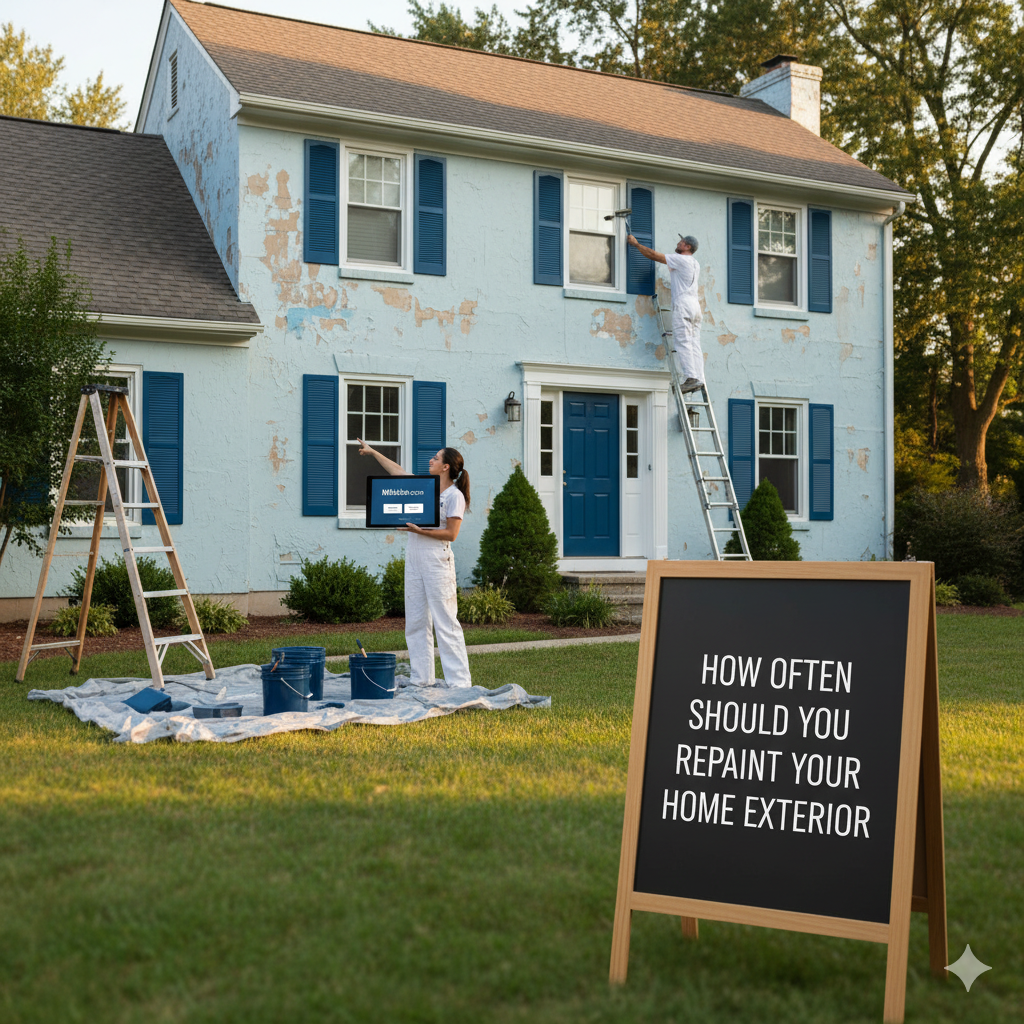
Exterior paint protects against moisture, extreme temperatures, and structural damage. The truth is that exterior paint does not last forever. Paint degrades slowly, and damage can occur without any obvious signs.
The exterior of a house should be painted every 5 to 10 years. This timeline is heavily dependent on the climate, material of the surface, quality and preparation, as well as maintenance. These factors can help homeowners reduce the cost to paint exterior of house and plan the repainting at the right time. Let’s get started!
Repainting frequency by exterior surface type
The way that different sidings react to humidity, temperature and sunlight varies. Here are some general guidelines for repainting surfaces.
Wood Siding
Every three to five years, wood siding needs painting. Paint protection is essential because wood absorbs water easily. This can lead to swelling, peeling and rot.
Fiber Cement Siding
Fiber cement has a higher moisture resistance and is stronger than wood. The only maintenance required is to repaint it every 7-10 years.
Aluminum Siding
The quality of the previous paint and the exposure to the sun will determine how often you need to repaint aluminum siding.
Stucco
Stucco, although durable, develops small hairline cracks with time. Repainting is recommended every 5 to 7 years in order to avoid moisture and mold.
Brick
Paint can be applied to bricks for 10-15 years. However, many houses require repainting after the first decade to fix peeling paint or faded areas.
The Factors that Influence the Frequency of Repainting
The most important factors to consider when deciding how often you should paint your house’s exterior are listed below.
1. Climate and weather conditions
The climate has a significant impact on the durability of paint. Paint durability is affected by the climate. Coastal regions are subject to salt, wind and freeze-thaw, while cold areas suffer from damage caused by freezing and thawing. Direct sunlight can cause fading and bubbling.
Winnipeg is a place with extreme changes in weather, so the paint on homes ages faster due to this.
2. Surface preparation quality
Paint longevity is dependent on the preparation of surfaces. Painting over mold or dirt will lead to premature failure. Before painting, professional painters sand and scrape surfaces, clean them, and then repair any damage. Even the finest paints will degrade if not correctly prepared. A professional paint calculator is a wise investment, rather than an expenditure.
3. Paint quality
Paints of higher quality perform better than cheaper alternatives due to their superior binders and pigments. They are also more resistant to the weather. Cheap paints can look great at first, but they will often peel, fade or chalk after a few short years.
4. Regular Maintenance
Maintenance can extend the life of your paintwork. Inspections are essential to catch minor problems before they become major.
Important maintenance tasks include:
- Cleaning exterior walls of dirt, pollen and moss
- Caulk joints and seal cracks
- Examining moisture or insects for activity
Most homes that are maintained consistently will take longer to repaint than the average.
The Signs To Repaint Your House
Even if the timeframe for repainting hasn’t been reached, warning signs can indicate that immediate action is needed.
- Fading paint
- Peeling and flaking paint
- The Trim and Siding of the House are Rotten
- The cracks and chips
- Mildew or persistent mold
How to extend the life of your home’s exterior paint
By following the tips below, you can extend the lifespan of the exterior of your house.
Selecting the right paint and tools
The choice of color is just as important as the paint. Quality tools and paint formulas ensure that the application is even and complete. Material waste can lead to uneven wear or early failure.
Good paint quality
Paint of higher quality is more resistant to humidity, UV radiation, and temperature fluctuations. The initial cost is higher, but it reduces repainting frequency, saving time and money in the long run.
Proper Surface Preparation Before Painting
Before painting, surfaces must be dry, clean and smooth. The steps of sanding, crack repair, mildew treatment, and replacement of damaged materials are all essential. Two coats instead of one will improve durability and protect against the effects of environmental stress.
Checking and touching up regularly
Every one to two years, inspect the exterior of your house. Peeling, cracking or moisture damage can be addressed immediately to extend your paint’s life by several years. This will delay the need for a full repaint.
Final Thoughts
Painting the exterior of your house isn’t just for beauty. It’s also about durability and value over the long term. Most homes require repainting between five and ten years. However, the climate, material, maintenance, and preparation all have a significant impact on this timeline.
By investing in high-quality preparation and maintenance, as well as routine painting, homeowners can maximize their return on investment, extend the life of paint and protect their properties. Understanding the repainting cycle helps to budget correctly and make educated decisions on the cost of paint exterior of house.