
Can I Use Interior Paint for Exterior Walls?
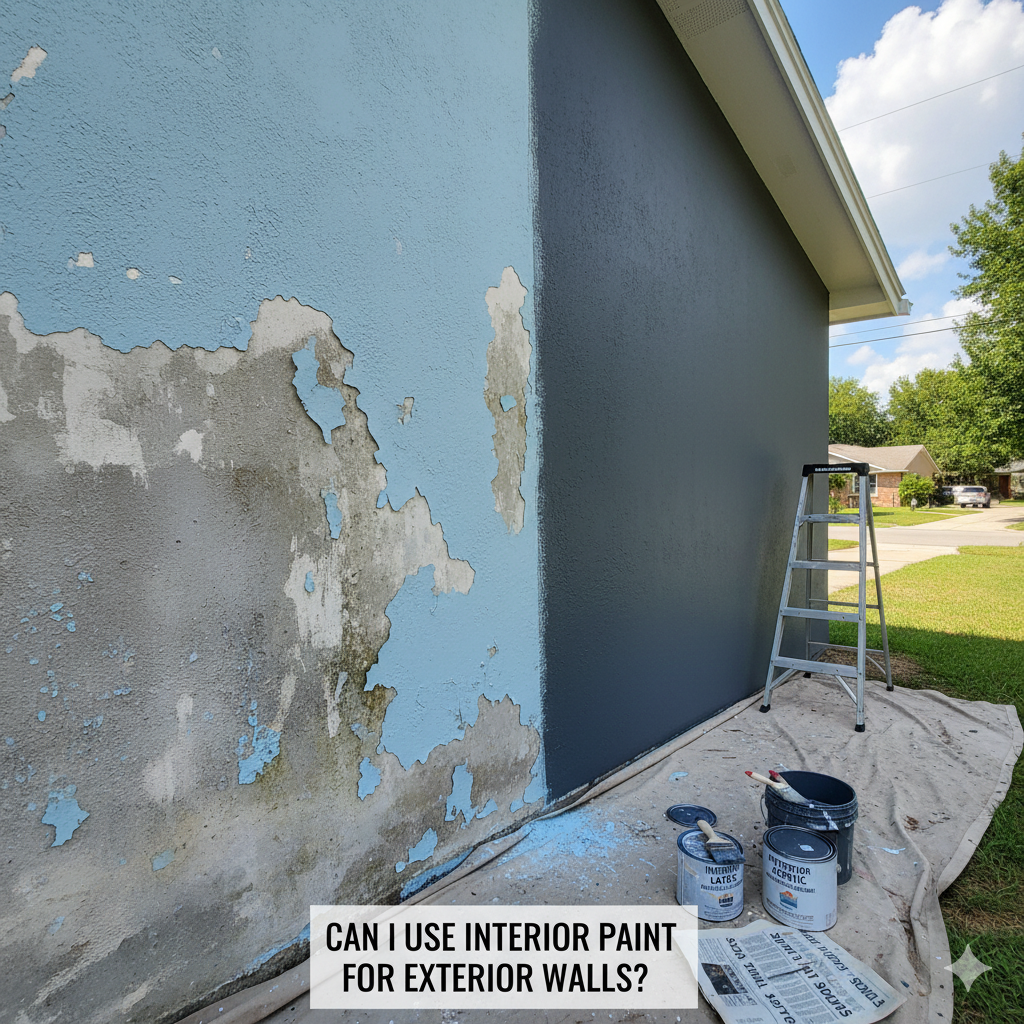
Many homeowners have leftover paint after a painting project indoors. This raises an important question. Can interior paint be used on exterior walls? It may appear more practical at first to use leftover paint rather than purchase new cans. This is especially true when painting exterior walls can be costly, and homeowners are already trying to reduce the cost to paint interior of house.
Interior and exterior paints cannot be used interchangeably. They may have a similar color or finish, but are designed for different environments. Interior paint used outdoors will result in rapid degradation, poor adhesion and a need for frequent repainting. Before making any decision, it is essential to understand the differences. This will impact your long-term cost and appearance. After reading this blog post, you will have a clear understanding of whether you should use interior paint outside or not. Let’s get started!
Can interior paint be used on exterior walls?
No, interior paint shouldn’t be applied to exterior walls.
Paint for interior walls is designed to be used in stable and climate-controlled conditions. Exterior walls are constantly exposed to moisture and temperature changes, as well as sunlight, wind, rain, and other weather conditions. Interior paint cannot resist these conditions without weather-resistant chemicals.
Even though the paint initially appears fine, it often fails within a few months.
Why Homeowners Consider Using Interior Paint Outside
Even though it is against professional advice, some people use indoor paints outdoors because:
- Savings by using leftover paint
- Avoiding a store trip is convenient.
- Unawareness of paint formula differences
- Similarities in finish and color that are misleading
These reasons may be understandable, but the consequences in the long run usually exceed any savings made on a short-term basis.
Differences between Interior and Exterior Paint
A paint isn’t just about color. It has a complex chemical composition that is designed to meet specific requirements. There are some differences between exterior and interior paints.
1. Pigments and UV resistance
Organic pigments are often used in interior paints. They provide vibrant colors indoors, but they fade quickly under the sun. These pigments do not have UV stability.
UV-resistant paint pigments are used in exterior paints to prevent chalking and slow down fading. Exterior paints retain their color much longer when exposed to sunlight than interior paints.
2. Binders with Flexibility
Binders are used to hold the paint and help it adhere to surfaces.
- The interior paint binder is rigid, designed to resist scuffs and stains and be easily cleaned.
- The exterior paint binder is flexible and allows the paint to contract or expand with temperature changes.
Interior paint that is not flexible cracks or peels off when it’s exposed to thermal stresses outdoors.
3. Additives to Weather Protection
Interior paints don’t contain the same additives as exterior paints. They have:
- Mildewcides to stop mold and mildew
- Moisture-resistant compounds
- Anti-chalking agents and anti-cracking agents
When used outside, interior paint is highly susceptible to damage from moisture and biological growth.
4. VOC levels and safety
VOCs (Volatile Organic Compounds) help to cure and flow paint. Low-VOC interior paints protect the indoor air quality. Because they’re designed to be used outdoors, exterior paints can have higher VOC content.
Two critical rules are derived from this:
- Interior paint should not be used outdoors
- Exterior paint should never be used indoors
5. Thickness and coverage of paint
Interior paints are thinner for easier indoor application. Exterior paint has a thicker consistency to ensure better coverage and weather resistance.
If you use interior paint outside, then:
- The coverage is weaker
- There is a need for more coats.
- The drying time is increased.
- Durability declines
What happens if you use interior paint outside?
The use of interior paint to cover exterior walls will almost always result in premature failure.
- Moisture can cause peeling or loss of adhesion.
- Colour fading due to UV exposure.
- Temperature changes can cause cracking and chalking.
- Mildew grows in humid conditions.
The paint may start to peel within one year and require a complete repainting.
Can Interior Paint Ever Be Used Outside?
Yes, technically. But only under particular and limited circumstances.
What Might be Acceptable
It is acceptable for:
- Short-term decorative projects
- Areas completely enclosed and covered with no exposure to moisture or sunlight
- Surfaces non-structurals to be replaced.
The results can be unpredictable, and it is not recommended to use permanent exterior surfaces.
Does interior paint work on covered porches?
Yes, with caveats. The walls of covered porches are protected from direct sunlight and rain, allowing interior paint to be applied for 1-3 years.
Tip for temporary exterior use:
- Seal the surface with a high-quality exterior primer
- For easier cleaning, use semi-gloss and satin finishes.
- Watch for signs of chalking and peeling.
For example, homeowners have painted their porch ceilings using Valspar interior ceiling paint to achieve a classical look. It can last for several seasons with regular maintenance and primer.
What are the best paint types for exterior walls?
The right exterior paint will ensure long-term performance. Here are the best paints that you can use on exterior walls:
Acrylic Latex Exterior paint
- High flexibility
- The surface is resistant to peeling, cracking or tearing.
- Fast Drying
- Clean up your home with ease.
This is the most popular exterior paint recommended for homes.
Exterior Oil Paint
- Adhesion to the product
- Excellent durability
- Perfect for metal and trim
The oil-based paints are durable but require longer drying time and have higher VOC content.
Elastomeric Paint
- For stucco or masonry
- Crack-bridging capability superior
- Excellent moisture resistance
Prioritizing Costs Before Painting
Interior paint is often used outdoors by homeowners to reduce costs, but it can fail prematurely and cause higher expenses.
It’s a good idea to use a paint calculator before starting any painting project. You can compare the costs of interior and exterior house paint. Budgeting properly helps you select the best materials without cutting corners.
Why is choosing the right paint essential?
Use paint according to its intended use:
- The paint job’s life is extended
- Protects exterior surfaces
- Maintains curb appeal
- Reduces long-term maintenance costs
Although interior paint can be economical, it will almost always lead to costly repairs and repainting.
Final Thoughts
The interior paint is not intended to be exposed outdoors. It deteriorates rapidly when exposed to sunlight, rain and temperature fluctuations. The idea of saving money can often lead to peeling, fading and premature repainting.
Use only exterior-grade paint for durable and professional results to use outside. You can mix an interior paint with exterior-grade paint if you like. The right paint will provide long-lasting durability, a better look, and lower costs.