
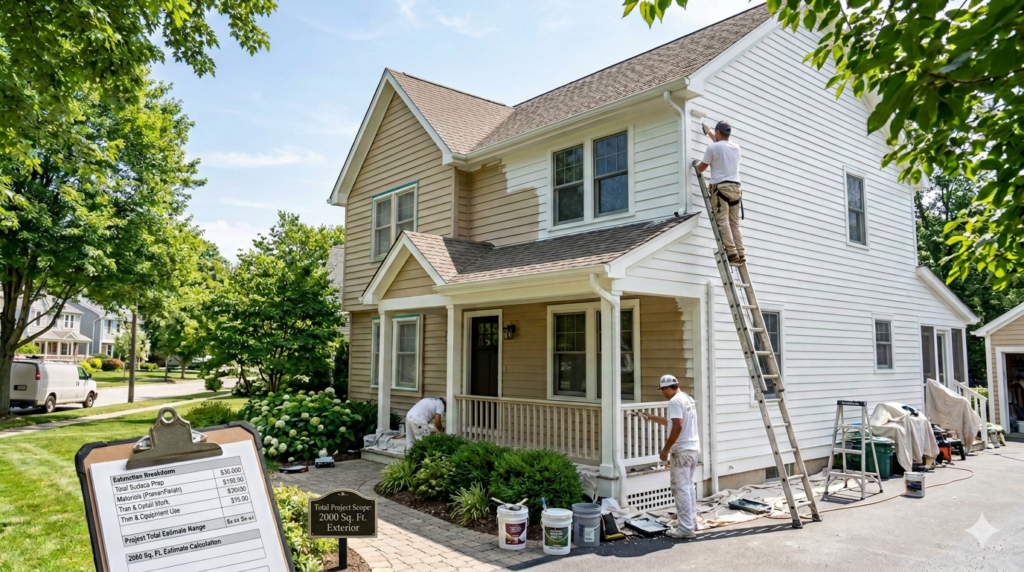
The Real Cost to Paint the Exterior of a 2000 Sq Ft House (Complete Guide)
If you’re planning a home improvement, one major question homeowners face is the cost to paint the exterior of a 2000 square foot house. The different factors that influence painting costs are essential for budgeting effectively. From choosing the right paint types to hiring a professional painter, multiple elements can affect the final price. In this guide, we break down all aspects of exterior painting costs so you can make an informed decision.
Factors That Influence Exterior Painting Costs:
Factors that influence exterior painting costs include the size and complexity of the house, chosen paint types, surface preparation, labor charges, and regional or seasonal pricing differences.
Size and Complexity of the House:
The size of your home is one of the most significant drivers of painting costs. A 2000 square foot house may sound straightforward, but if it includes multiple stories, intricate trims, or decorative features, the project can require more labor charges and time. Complex architectural details may also increase the need for specialized equipment and careful surface preparation.
Type of Paint and Quality For Cost to Paint:
Choosing the right paint types directly impacts both aesthetics and durability. High-quality paints can be more expensive upfront but last longer, reducing the need for frequent repainting. Factors like paint durability and weather resistance should guide your selection. Premium paints combined with a professional painter’s skill often provide the best balance between long-term savings and visual appeal.
Surface Preparation Requirements:
Before painting, surfaces need proper cleaning, sanding, and priming. Surface preparation is crucial for achieving a lasting finish. Homes with old or peeling paint, water damage, or rough textures may require additional repairs, which can increase labor charges and material quality expenses. Skipping preparation may reduce initial costs but lead to premature wear and higher long-term painting cost.
Labor Costs and Contractor Fees:
Hiring a professional painter usually comes with higher upfront costs compared to DIY painting, but it ensures quality results and minimizes errors. Labor fees depend on experience, project complexity, and local market rates. Requesting multiple contractor quotes is recommended to compare pricing and service quality.
Regional Price Variations:
Painting cost can differ significantly depending on your location. Urban areas or regions with higher living expenses tend to have higher labor charges and material costs. Seasonal demand in your region may also affect pricing, making it important to factor in seasonal price variations when planning your project.
Average Cost Range for a 2000 Square Foot House:
The average Cost to Paint for a 2000 square foot house typically falls between $5,000 and $8,000, depending on paint types, labor charges, and the extent of surface preparation.
Low-End Cost Estimates
For a smaller budget, Cost to Paint a 2000 square foot house may cost between $3,000 and $5,000. This usually involves standard paint types and minimal surface preparation, sometimes performed by less experienced painters or as a DIY painting project.
Mid-Range Cost Estimates
A typical painting cost for most homeowners falls between $5,000 and $8,000. This range often includes higher-quality paint types, moderate surface preparation, and hiring a professional painter.
High-End Cost Estimates
High-end projects can exceed $10,000, especially when using premium paint types, extensive surface preparation, and specialized finishes. Labor charges are higher for skilled professionals, and this range often accounts for home improvement budgets with added durability and aesthetic appeal.
Cost Per Square Foot Breakdown
Breaking costs down per square foot helps with budget planning. Cost to Paint For a 2000 square foot house, prices typically range from $1.50 to $5 per square foot, depending on paint durability, preparation work, and labor intensity.
Comparing DIY vs. Professional Painting
DIY painting can save on labor charges, but risks include uneven finishes and missed prep steps. Hiring a professional painter increases initial painting cost but guarantees better results and longer-lasting paint. Balancing cost versus quality is key.
Additional Costs and Hidden Expenses:
When planning to paint the exterior of a 2000 square foot house, it’s important to account for additional costs and hidden expenses such as extra materials, equipment, repairs, permits, and seasonal price variations that can significantly impact your overall painting cost.
Material Costs Beyond Paint:
Beyond paint types, additional materials like primers, caulk, and sealants contribute to painting cost. Investing in high-quality materials enhances paint durability and reduces the need for frequent touch-ups.
Equipment and Tools:
Ladders, brushes, sprayers, and safety gear are necessary whether you choose DIY painting or hire a professional painter. These tools can add hundreds of dollars to your project, depending on quality.
Repairs and Surface Prep:
Unforeseen repairs, such as replacing rotten wood or patching cracks, affect labor charges and surface preparation costs. Thorough inspection beforehand prevents surprise expenses.
Permits or HOA Fees:
Some communities require permits or approval from homeowner associations. Factoring these into your home improvement budget ensures your painting cost estimate is accurate.
Seasonal Pricing Factors:
Demand fluctuates with the weather and season, influencing seasonal price variations. Scheduling your project during off-peak months can save money on both labour and materials.
Tips for Reducing Exterior Painting Costs:
To reduce exterior painting costs, focus on choosing durable yet affordable paint types, hire the right professional painter, schedule work during off-peak seasons, and consider strategic DIY painting for simpler tasks.
Choosing Affordable Yet Durable Paint:
Opt for mid-range paint types that offer longevity without breaking the budget. Focusing on paint durability rather than brand prestige often yields the best value.
Hiring the Right Contractor:
Request multiple contractor quotes and check references. A skilled professional painter can deliver high-quality results efficiently, potentially saving costs by avoiding errors.
Scheduling During Off-Peak Seasons:
Timing your painting project during slower months can reduce labor charges and take advantage of seasonal discounts, lowering your overall painting cost.
Proper Maintenance to Extend Paint Life:
Routine house maintenance, such as cleaning gutters and trimming vegetation, protects your exterior paint, extending its lifespan and reducing long-term expenses.
Cost-Saving DIY Considerations:
DIY painting may save money if you have the time and skills. Focus on preparation and safety to maximize the benefits and minimize the risk of costly mistakes.
Conclusion and Final Cost Considerations:
Cost to Paint of 2000 square foot house can range from $3,000 to over $10,000, depending on paint types, labor charges, and surface preparation.
- Importance of Quality vs. Price: While staying within budget is essential, choosing quality materials and a reputable professional painter ensures long-term savings and superior results.
- Questions to Ask Your Painter: Always ask about paint durability, warranty, preparation steps, and total painting cost before hiring a professional painter.
- Avoiding Common Costly Mistakes: Skipping proper surface preparation or choosing cheap paint types may reduce upfront costs but lead to higher long-term expenses.
- Making an Informed Decision: Balancing your home improvement budget, labor charges, and desired finish ensures you get the best value when planning exterior painting.