
Ceiling painting is one of those projects that homeowners often underestimate — right up until they’re standing on a ladder with a roller, neck craned back, wondering why they didn’t just hire someone.
The cost to paint a ceiling varies more than most people expect. A simple bedroom ceiling is a very different project from a two-story great room with a coffered design, and the difference in price reflects that. Understanding what drives ceiling painting costs helps you budget accurately, compare contractor quotes intelligently, and decide whether to DIY or call a professional.
Here’s everything you need to know about ceiling painting costs in 2026 — from per-square-foot averages to full-room breakdowns and the factors that push prices up or down.
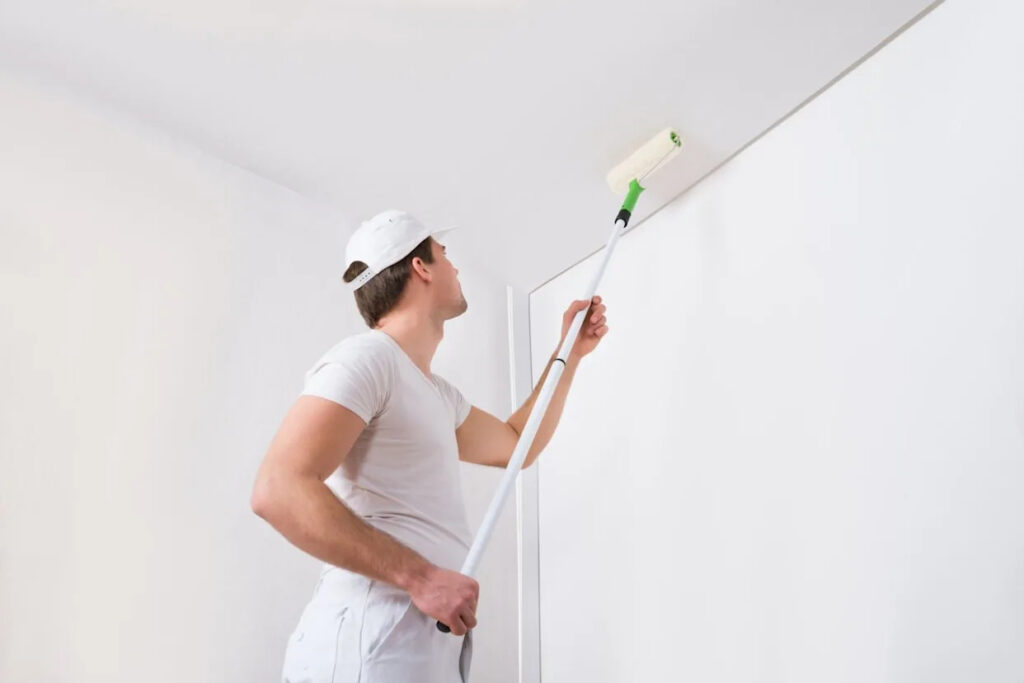
Average Cost to Paint a Ceiling: Quick Reference
| Project Type | DIY Cost | Professional Cost |
| Standard bedroom ceiling (12×12) | $30–$60 | $150–$350 |
| Living room ceiling (16×20) | $50–$100 | $250–$500 |
| Kitchen ceiling | $30–$70 | $200–$400 |
| Full interior ceiling (2,000 sq ft home) | $150–$300 | $900–$2,500 |
| Vaulted / cathedral ceiling | $75–$175 | $400–$900 |
| Coffered or tray ceiling | $100–$250 | $500–$1,500+ |
These ranges reflect national averages. Your location, ceiling height, surface condition, and paint type will all affect your final number.
Ceiling Painting Cost Per Square Foot
The most common way to price ceiling painting — especially when getting professional quotes — is by square foot.
- DIY: $0.05–$0.15 per square foot (materials only)
- Professional: $0.50–$1.50 per square foot (labor + materials)
For a 200 sq ft ceiling (roughly 14×14 room): DIY $10–$30 | Professional $100–$300
For a 400 sq ft ceiling (20×20 living room): DIY $20–$60 | Professional $200–$600
The per-square-foot rate goes up when ceilings are taller, more detailed, in poor condition, or require specialty finishes. It goes down for large, straightforward, single-color jobs.
Use our Interior Painting Cost Calculator to get a more precise estimate based on your specific room dimensions.
What Factors Affect the Cost to Paint a Ceiling?
1. Ceiling Height
This is the single biggest driver of cost beyond square footage.
- 8-foot ceiling: Standard pricing
- 9–10-foot ceiling: 10–20% premium
- 12-foot ceiling: 25–50% premium
- Vaulted / cathedral (16+ feet): 50–100% premium or more
High ceilings require more setup time, greater physical demand on the painter, and sometimes specialized equipment rental — all of which get passed on in the quote.
2. Ceiling Condition
New drywall or a ceiling in good condition is straightforward to paint. A ceiling with water stains, cracks, texture damage, or layers of old paint adds time and materials.
- Water stains: Require stain-blocking primer; adds $50–$150
- Cracks: Need patching and skim coating; adds $100–$300+
- Popcorn texture removal: $1–$3 per square foot (separate project done before painting)
- Smoke or nicotine damage: Requires specialty primer; adds $75–$200
3. Ceiling Type and Complexity
- Flat / smooth ceiling: Baseline pricing
- Textured ceiling (orange peel, skip trowel): Minor premium
- Popcorn ceiling: 15–30% premium (harder to paint evenly)
- Tray ceiling: 30–60% premium (multiple planes and transitions)
- Coffered ceiling: 50–100%+ premium (recessed panels with defined beams)
- Vaulted / cathedral ceiling: 50–100% premium (primarily a height issue)
4. Paint Type and Quality
- Basic flat ceiling paint: $20–$35 per gallon (covers ~350–400 sq ft)
- Premium ceiling paint: $40–$65 per gallon
- Specialty ceiling paint (mold-resistant, moisture-resistant): $45–$75 per gallon
For kitchens and bathrooms, moisture-resistant formulas are worth the extra cost. For bedrooms and living rooms, a standard flat finish works well.
5. Color Choice
The standard for ceilings is flat white or off-white — economical and practical. Colored ceilings add cost:
- Dark ceiling colors require multiple coats; adds 20–40% to labor and materials
- Accent ceiling colors require careful cutting in at edges; adds labor time
- Color changes from dark existing color may require primer plus two finish coats; adds 30–50%
6. Paint Finish
- Flat finish: Standard, lowest sheen, best for hiding imperfections — most economical
- Matte: Slightly more durable than flat, similar appearance — minor premium
- Eggshell: Slightly reflective, washable — 10–15% material cost increase
- Satin: More washable, better for high-moisture areas — 15–20% material cost increase
7. Labor Rates by Region
| Region | Labor Rate (per sq ft) | Notes |
| Northeast (NY, MA, CT) | $1.00–$2.00 | Highest labor market |
| Southeast (GA, FL, TX) | $0.60–$1.20 | More affordable labor |
| Midwest | $0.65–$1.30 | Moderate labor costs |
| West Coast (CA, WA, OR) | $1.00–$1.80 | High labor market |
These are labor-only figures. Add $0.15–$0.30 per square foot for materials.
Room-by-Room Ceiling Painting Cost Breakdown
Bedroom Ceiling (12×12 = 144 sq ft)
- DIY cost: $25–$50 (1 gallon of paint, roller, tray, tape)
- Professional cost: $150–$300
When to DIY: Bedroom ceilings at standard height in good condition are among the most accessible DIY painting projects. If you’re comfortable on a ladder and can take the time to prep properly, this is reasonable.
Living Room Ceiling (16×20 = 320 sq ft)
- DIY cost: $50–$100
- Professional cost: $250–$500
Note: Open-concept living spaces can easily exceed 400–600 square feet, pushing professional costs toward $400–$800.
Kitchen Ceiling (~150–200 sq ft)
- DIY cost: $40–$80 (including appropriate paint type)
- Professional cost: $200–$400
Kitchens require degreasing before paint will adhere, and moisture-resistant paint is recommended.
Bathroom Ceiling (60–100 sq ft)
- DIY cost: $25–$60
- Professional cost: $150–$300
Tip: Always use mold-resistant ceiling paint in bathrooms, especially in homes without good ventilation.
Full-Home Ceiling Repaint (2,000 sq ft home)
- DIY cost: $150–$350 (materials + supplies)
- Professional cost: $900–$2,500
Professional painters often use airless sprayers for full-home ceiling repaints, which dramatically speeds up the process while delivering a more even finish than rolling.
DIY vs. Professional: When Does Each Make Sense?
DIY Ceiling Painting Makes Sense When:
- Ceilings are 8–9 feet high and in good condition
- You’re comfortable on a ladder and have time to do proper prep
- You’re painting a single room with a white or light color
- The ceiling doesn’t require extensive repairs or priming
Professional Ceiling Painting Makes Sense When:
- Ceilings exceed 10 feet or have complex geometry
- There are water stains, cracks, or damage requiring repair
- You’re painting multiple rooms or the full interior
- A spray finish is desired for a flawless result
- Time is limited — professionals work much faster
For multi-room projects, the math often tilts toward professional. A painter can complete what would take a homeowner a full weekend in a single day — with better results.
How to Save Money on Ceiling Painting
For DIY Projects:
- Buy paint at volume — one gallon covers a standard bedroom ceiling with coverage to spare
- Use a quality extension roller to eliminate most ladder work on 8-foot ceilings
- Invest in good painter’s tape — it saves touch-up time
- Prime only where needed (water stains, repairs) rather than the whole ceiling
For Professional Projects:
- Combine ceiling painting with wall painting — contractors discount bundled work
- Schedule during off-peak times (late fall, winter in mild climates)
- Minimize scope by doing prep work yourself (moving furniture, taping trim)
- Get 3 quotes — ceiling painting prices vary significantly between contractors
Use our Paint Estimator to calculate exactly how much paint you’ll need before buying — and avoid overbuying or making a second trip to the store.
Frequently Asked Questions
How much does it cost to paint a ceiling per square foot?
Professionally, expect to pay $0.50–$1.50 per square foot for ceiling painting including labor and materials. DIY material costs run $0.05–$0.15 per square foot. Taller, more complex, or damaged ceilings sit at the higher end of the range.
Is it worth paying someone to paint a ceiling?
For tall, damaged, or complex ceilings — yes, almost always. For a standard 8-foot bedroom ceiling in good condition, experienced DIYers can get a professional-looking result.
How many coats of paint does a ceiling need?
Most ceilings in good condition need two coats — a primer or first coat followed by a finish coat. Ceilings with stains, significant color changes, or fresh drywall may require three coats.
What type of paint is best for ceilings?
Flat finish ceiling paint is standard. In kitchens and bathrooms, use a mold- and moisture-resistant formula. For high-traffic or high-humidity areas, consider a matte or eggshell finish for easier cleaning.
How long does it take to paint a ceiling?
A professional can paint a single bedroom ceiling in 1–2 hours. A full-home ceiling repaint typically takes 1–2 days. DIY timeline is roughly 2–3x longer.
Does ceiling paint need primer?
Not always. If you’re painting white over white on a ceiling in good condition, a self-priming ceiling paint may be sufficient. Stains, repairs, fresh drywall, and significant color changes all require a dedicated primer coat first.
Get an Accurate Estimate Before You Start
Ceiling painting costs are highly variable, but now you have the framework to understand what drives pricing and what you should expect to pay in 2026.
Before hiring a contractor or buying materials, use our Interior Painting Cost Calculator for a full-project estimate and our Paint Estimator to calculate exactly how many gallons you need.