
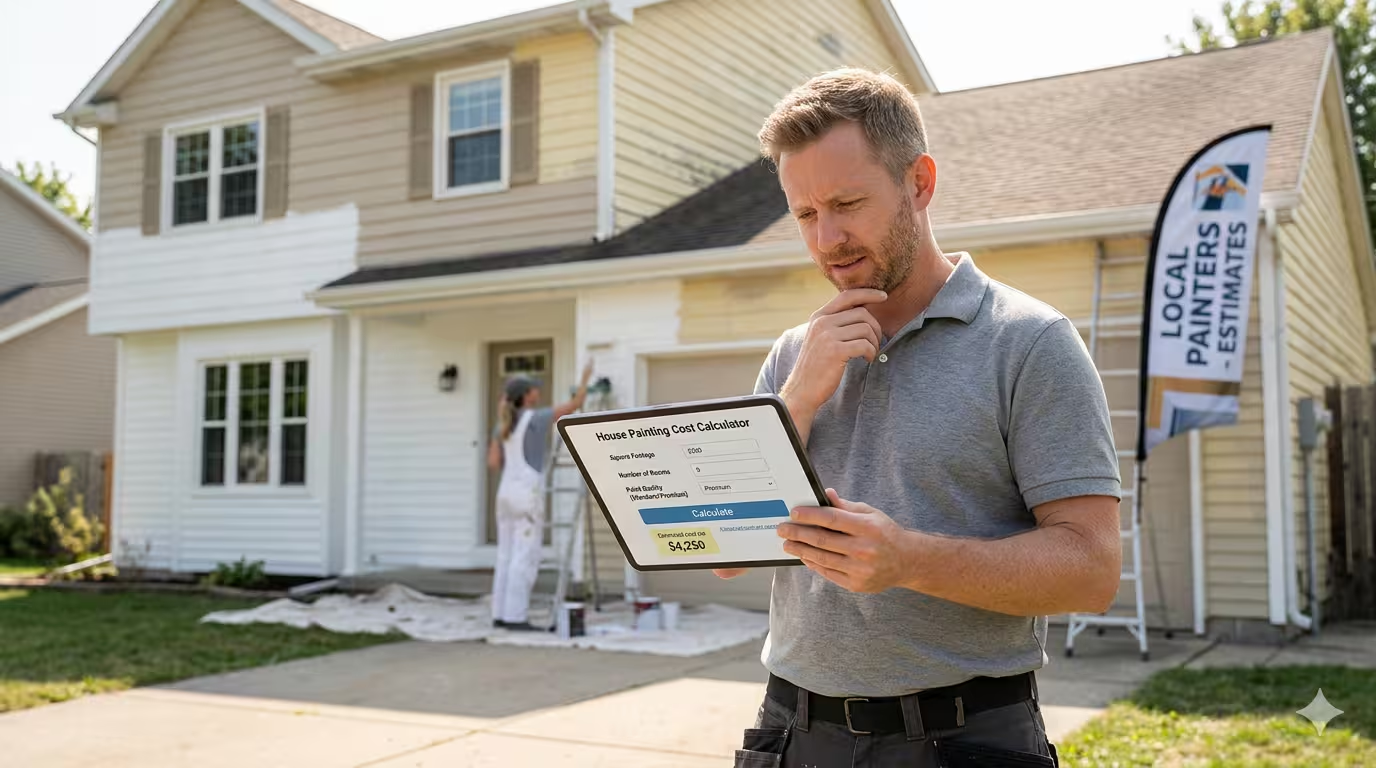
How Accurate is a House Painting Cost Calculator?
It is imperative to know the possible costs when coming up with an idea of how to give an overhaul to the home. Quite a number of homeowners use a house painting cost estimator to have a rough estimate of the cost of painting. However, how precise are these tools, and can they substitute a comprehensive painting estimate created by a professional? This paper discusses the functionality, accuracy and constraints of such calculators, giving practical advice to homeowners budgeting.
House Painting Cost Calculators:
House Painting Cost Calculators are online tools that provide homeowners with quick painting estimates by factoring in square footage, paint type, and labor costs.
What Is a House Painting Cost Calculator?
A house painting cost calculator is an online or software-based tool that estimates the cost of painting a home. These calculators consider various factors like square footage, paint type, and labor requirements to generate a preliminary cost. They serve as a starting point for homeowners who want a rough estimate without engaging a professional immediately.
How These Calculators Work
Most calculators operate on a formula that multiplies the area of surfaces to be painted by the cost of materials and labor cost. Some advanced tools also factor in surface preparation and regional pricing differences, helping homeowners understand potential cost variations in their area. However, these are general estimates and may not capture all the nuances of a real-world painting project.
Key Inputs Required (Square Footage, Paint Type, Labor, etc.):
To use a house painting cost calculator effectively, homeowners need to provide detailed inputs:
- Square footage of walls and ceilings
- Type of paint (latex, oil-based, or specialty finishes)
- Level of surface preparation required
- Local labor cost averages
- Additional materials like primers, brushes, and drop cloths
Providing accurate data for these inputs increases the reliability of the resulting painting estimate.
Factors Affecting Calculator Accuracy:
Factors affecting calculator accuracy include paint quality, labor cost, house size, surface complexity, and any additional prepare or repair work, all of which can cause a house painting cost calculator to vary from real-world painting estimates.
Type and Quality of Paint:
Paint quality significantly impacts the total cost. Premium paints may cover more surface area but come with higher upfront costs. A house painting cost calculator can adjust estimates based on the selected paint type, but variations in brand and finish may still affect accuracy.
Labor Costs and Regional Variations:
Labor cost varies widely depending on geographic location and the complexity of the job. Urban areas or regions with a high demand for professional painting services may have higher rates, while rural areas may be more affordable. Calculators typically use average rates, which may not reflect local market conditions.
House Size and Surface Complexity:
Larger homes or structures with intricate details, high ceilings, or multiple textures can significantly increase costs. While a house painting cost calculator asks for square footage, it may not fully account for surface complexity, leading to underestimated painting estimate results.
Additional Costs (Prep Work, Repairs, etc.):
Prep work such as wall repair and priming is often a hidden expense. A calculator may include standard prep costs, but custom repairs, water damage, or mold remediation can dramatically increase the final price. Homeowners should be aware that online cost calculators are best used as starting points rather than definitive quotes.
Comparing Calculator Estimates with Real Costs:
When comparing calculator estimates with real costs, homeowners often find that actual painting estimates can exceed initial house painting cost calculator results due to unexpected labor costs, surface preparation, and material choices.
Typical Variances in Estimates:
In practice, the final painting estimate can vary 10–30% from what a house painting cost calculator predicts. The discrepancies usually arise from unexpected labor needs, material quality, or unforeseen surface repairs.
Case Studies and Real-World Examples:
For example, a 2,000-square-foot home estimated at $3,500 by a calculator ended up costing $4,200 due to extensive surface preparation and premium paint quality choices. Real-life projects often demonstrate the importance of adjusting homeowner budgeting based on professional advice.
Tips to Get More Accurate Estimates:
- Double-check square footage measurements
- Specify paint type and brand
- Include all surface preparation tasks
- Research local labor cost averages
- Consider consulting multiple painting contractor quotes
Through merging a house painting cost calculator with these steps, homeowners can achieve a more realistic financial plan.
Pros and Cons of Using a Painting Cost Calculator:
Using a painting cost calculator offers quick painting estimates and helps with homeowner budgeting, but it may overlook local labor costs, surface complexities, and hidden prep or repair expenses.
Advantages for Homeowners:
House painting cost calculators offer several benefits:
- Quick preliminary painting estimate
- Helps with homeowner budgeting and financial planning
- Provides insight into the impact of different paint types or premium finishes
- Useful for DIY painting comparisons
Limitations and Common Errors:
Despite advantages, these tools have limitations:
- May not reflect complex surfaces or repairs
- Cannot fully account for local labor cost variations
- Often ignore specialty coatings or textures
- Potential for inaccurate painting estimate if input data is incomplete
Situations Where Calculators Are Most Useful:
Calculators are ideal for homeowners searching rough numbers, DIY enthusiasts exploring project costs, or when comparing multiple painting contractor quotes. They are less reliable for custom projects requiring detailed surface preparation.
Improving Accuracy of Your Estimates:
To improve the accuracy of your estimates, provide detailed inputs, check local labor cost, factor in paint quality, and consider necessary surface preparation before relying on a house painting cost calculator.
Providing Detailed Input Information:
Accuracy improves when homeowners enter exact square footage, type of paint, and specific prep work needs into the calculator. Vague inputs often result in underestimated costs.
Checking Local Labor Rates:
Even the best online cost calculators cannot adjust for micro-market variations. Researching local labor cost averages ensures the painting estimate reflects reality.
Considering Paint and Material Costs Carefully:
Premium paint quality or specialty finishes can increase costs. Including detailed material specifications in the calculator will generate a more precise estimate.
Consulting Professionals vs. Online Calculators:
While house painting cost calculators are convenient, combining them with professional painting contractor quotes ensures accuracy and mitigates unexpected costs. A professional can evaluate unique aspects of your home, such as surface imperfections or structural challenges, that a calculator cannot fully account for.
Conclusion:
Homeowners should use house painting cost calculators as a preliminary budgeting tool while complementing them with professional advice. Providing detailed inputs, checking local labor cost, considering paint quality, and factoring in potential repair costs ensures a more realistic project budget. By combining digital tools with expert insights, homeowners can achieve both accuracy and peace of mind in their painting projects.