
How Much Does It Cost to Repaint a House Interior?
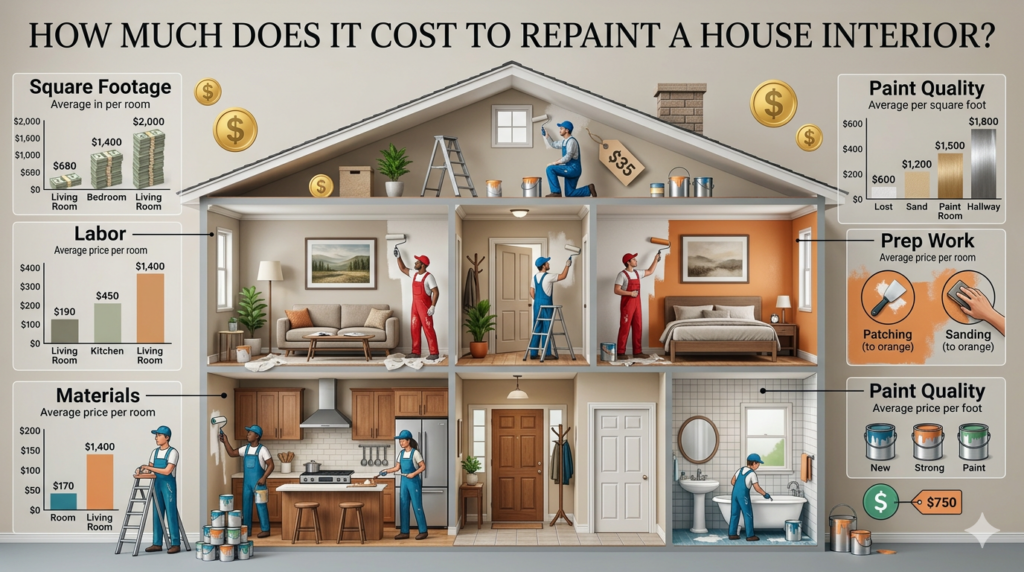
If you’re wondering how much does it cost to repaint a house interior, you’re not alone. Homeowners across the country regularly update their spaces with fresh paint to improve aesthetics, boost property value, and protect interior surfaces. The total interior painting cost depends on several factors, including square footage, paint quality, labor costs, and the level of preparation required.
Knowing the typical cost to paint house interior spaces can help you budget effectively and avoid unexpected expenses. Whether you’re researching interior house painting prices for a small apartment or calculating the full repainting house interior cost for a large home, this guide breaks down everything you need to know.
Average Cost to Repaint a House Interior:
The overall cost of interior painting varies broadly relying on home size and complexity. On average, homeowners spend between $3,000 and $8,000 to repaint a standard single-family home. However, larger homes or high-end finishes can push the cost to paint house interior spaces well beyond $10,000.
National Average Interior Painting Costs:
Nationally, the average cost to repaint a house interior is around $5,500 for a 2,000-square-foot home. This estimate includes labor costs, standard paint quality, and minor prep work. While interior house painting prices differ by region, most homeowners can expect moderate variation depending on local market demand and contractor availability.
Cost Per Square Foot for Interior Painting:
The cost per square foot for interior painting typically ranges from $2 to $6. This rate includes materials and labor costs. Higher-end paint quality and complex wall textures can increase the rate. Calculating by square footage provides a clearer picture when determining how much it costs to repaint a house interior for larger properties.
Cost Per Room to Repaint:
The average cost to paint a room ranges from $400 to $1,200, depending on the room’s size and ceiling height. Bedrooms are generally less expensive, while larger living areas cost more due to increased square footage. When reviewing average interior wall painting costs, room size is a primary driver.
Apartment vs. Single-Family Home Costs:
Apartments often cost less overall due to smaller square footage, but the interior painting cost per square foot may be slightly higher if access is limited. Single-family homes may have higher overall totals, though economies of scale can reduce per-room expenses.
2026 Interior Painting Cost Estimates:
Looking ahead, interior house painting prices in 2026 are expected to rise slightly due to inflation and increasing labor costs. Homeowners planning renovations should budget for moderate increases in material costs and professional rates.
Factors That Affect Interior Painting Costs:
Several variables influence the final cost of repainting a house interior, and understanding them helps prevent budget surprises.
Size of the Home (Square Footage):
The total square footage is the most significant cost factor. Larger homes require more paint, primer, and labor hours. More square footage directly increases the cost of interior painting and the overall project timeline.
Type and Quality of Paint Used:
Paint quality plays a crucial role in both price and durability. Premium paints cost more upfront but may reduce the need for multiple coats. Choosing higher paint quality can increase the average cost to paint interior walls, but it often improves longevity.
Labor Costs in Your Area:
Labor costs vary by region and demand. Urban areas tend to have higher professional interior painting costs than rural areas. Hiring an experienced painting contractor ensures better results but may increase total expenses.
Wall Condition and Preparation Work:
Walls with cracks, holes, or peeling paint require extensive preparation. Additional sanding, patching, and primer application increase the cost of painting house interior projects. Prep work can account for a significant portion of the total.
Ceilings, Trim, Doors, and Baseboards:
Including ceilings, trim, doors, and baseboards increases labor complexity. Detailed trim work increases the interior painting cost per square foot because it requires greater precision and extra time.
Interior Painting Cost Breakdown:
Compassionate where your money goes can clarify overall expenses.
Labor vs. Material Costs:
Labor costs typically account for 60%–80% of the total interior painting cost, while materials like paint, primer, tape, and supplies make up the remainder. Hiring a skilled painting contractor may increase upfront pricing but ensures professional finishes.
Primer and Multiple Coats:
Using primer improves paint adhesion and coverage. If switching from dark to light colors, multiple coats are often necessary, increasing the average cost to paint interior walls. Primer and additional coats extend project time and material usage.
Accent Walls and Custom Finishes:
Accent walls, textured finishes, or specialty designs raise interior house painting prices. Custom detailing requires more skill and longer hours of labor.
Furniture Moving and Protection:
Contractors may charge extra for moving and covering furniture. These services affect the overall professional interior painting cost, especially in fully furnished homes.
Cleanup and Post-Project Touch-Ups:
Quality contractors include cleanup and minor touch-ups in their pricing. However, extensive corrections can increase the cost of repainting the house interior if additional labor is required.
DIY vs. Hiring a Professional Painter:
Choosing between DIY and professional services significantly impacts both the budget and the results.
DIY Interior Painting Costs:
The typical DIY interior painting cost ranges from $500 to $2,000 for a full home, depending on square footage and paint quality. While this approach lowers labor costs, homeowners must purchase supplies and invest substantial time.
Cost to Hire Professional Painters:
The professional interior painting cost averages $2 to $6 per square foot. Although more expensive than DIY interior painting, professional services deliver consistent finishes and faster completion times.
Time Investment Comparison:
DIY projects can take several weekends, while professionals may complete the same job in a few days. Time savings often justify the higher cost of professionally painting a house’s interior.
Quality and Longevity Differences:
Professionals use proper primers, tools, and techniques. This improves durability and reduces the need for frequent repainting, ultimately lowering long-term interior painting costs.
When Hiring a Pro Is Worth It:
Complex layouts, high ceilings, or extensive prep work make hiring a painting contractor worthwhile. In these cases, paying higher interior house painting prices ensures quality results.
How to Save Money on Interior Painting:
Budget-conscious homeowners can reduce the repainting of the house interior with smart planning.
Best Time of Year to Paint Indoors:
Winter months often offer lower labor costs due to reduced demand, potentially lowering the cost of professional interior painting.
Choosing Cost-Effective Paint Options:
Mid-range paint quality balances affordability and durability, helping control the average cost to paint interior walls.
Getting Multiple Quotes:
Comparing at least 3 quotes helps identify fair interior painting rates per square foot in your area.
Bundling Rooms for Better Pricing:
Painting multiple rooms at once may reduce the cost per room compared to smaller, separate projects.
Negotiating with Painting Contractors:
Discuss the scope and preparation responsibilities with your painting contractor to manage overall costs for painting the house interior.
Interior Painting Cost by Room Type:
Room size and usage affect the cost of interior painting.
- Bedroom Painting Cost: The cost to paint a standard bedroom ranges from $400 to $900, depending on the square footage and ceiling height.
- Living Room Painting Cost: Living rooms often cost $800 to $1,500 due to larger square footage and open layouts.
- Kitchen Painting Cost: Kitchens may cost $600 to $1,200. Cabinets and detailed trim increase the interior painting cost per square foot.
- Bathroom Painting Cost: Bathrooms typically range from $300 to $800. Moisture-resistant paint quality is essential in these spaces.
- Hallways and Open Areas: Hallways and open-concept areas may increase the average cost to paint interior walls due to longer wall runs and height variations.
Frequently Asked Questions:
How long does it take to repaint a house interior?
Professionals usually complete projects in 3–7 days, relying on square footage and prep requirements.
How often should you repaint interior walls?
Most homes require repainting every 5–7 years, depending on wear and paint quality.
Does repainting increase home value?
Yes, fresh paint improves appearance and can increase resale appeal, often offsetting the repainting house interior cost.
How much paint is needed for a full house?
A 2,000-square-foot home typically requires 10–15 gallons, depending on primer use and coverage.
What is the cheapest way to repaint a house interior?
The most affordable option is to manage prep work yourself and minimize accent features, reducing overall DIY interior painting costs while maintaining quality results.