
Painting Labor Cost vs. Material Cost: Where Does Your Money Go?
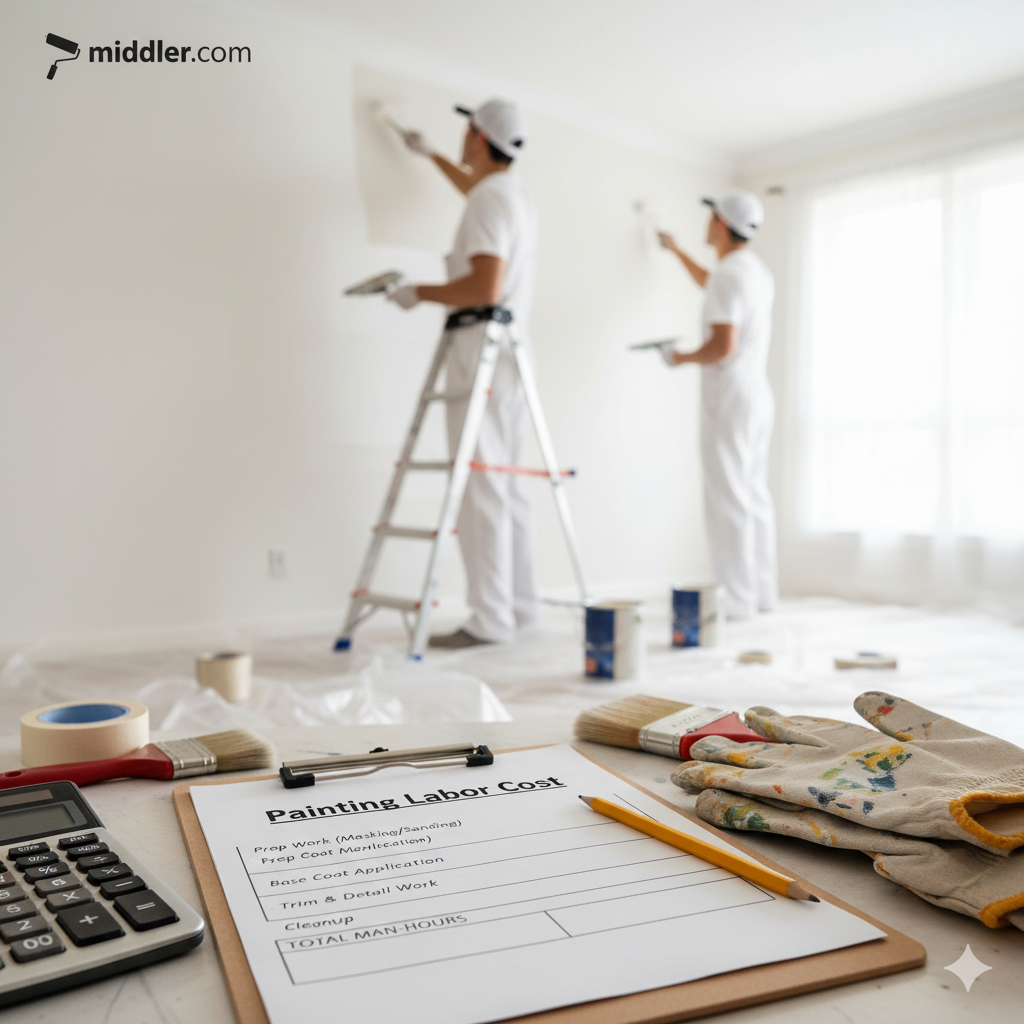
Do you realize that up to 60% of the cost for painting can be attributed solely to labor? The truth may surprise you. Most people think that high-quality paint costs a lot, but it’s not the only thing. Understanding painting labor cost vs. material cost will help you identify where your money goes. Clarity is what you’re looking for. The guide will help you to see where you spend your money, so you can make better decisions and avoid overspending.
Anyone planning to paint a project should compare the labor cost vs. the material cost. In this blog post, we will explain the differences between material and labor costs. You will also learn why your labor budget is often the most important. We’ll help you find the right balance between quality materials and fair labor costs. At the end of this article, you will be able to make informed decisions about cost-effective paint. Let’s get started.
What are Painting Costs: Labor vs. Materials
If you decide to hire a professional painter for your project, the budget is split between two major parts: Labor and Materials. The labor includes everything painters do, including prep work and finishing touches. Paint, primer, rollers and brushes are all materials. Knowing these elements will help you control your costs and prevent overspending.
How Much Does Painting Labor Cost?
Painting costs are based on the amount of labor involved. This includes surface prep, repairing of cracks, priming, sanding, as well as painting and cleaning. Rates of labor vary based on experience, location and the complexity of a project.
- Hourly Rates vs fix rates: While some painters charge an hourly rate while others offer flat rates.
- Experience Matters: Expert painters are more expensive, but their work will last much longer.
- The complexity of the project: Costs are affected by the complexity of a project. For example, high ceilings with detailed trims or textured wall surfaces will cost more.
The cost of labor is usually 60-70% the total price.
How Much Does Painting Material Cost?
Materials are everything used to complete your painting project. This includes:
- Paint: Paint is the main component; its quality impacts coverage and durability.
- Primer: Painters use it to prepare walls for painting and avoid uneven surfaces.
- Rollers and brushes: These are essential tools to apply paint effectively.
- Additional Supplies: Masking tape, drop cloths, cleaning products, and sandpaper.
Materials costs usually account for 30-40% of your total budget. Paints with high-end finishes can be expensive, while cheaper paints may need extra coats and increase labor costs.
Why is Labor Cost Higher than the Material Cost?
Paint is not the most expensive part of the painting process. It’s labor that drives up costs. Here’s why:
1. More time taken
It takes more work than many homeowners think. All of the steps, including surface cleaning, sanding and priming as well as drying, add to the time required. The first coat needs to dry completely before you start on the second. The result of rushing this process is a poor finish and the need for costly touch-ups.
2. Skills and expertise
Painters with experience bring their training, techniques, and efficiency to each project. Painters who are experienced know how to paint uniformly and can avoid mistakes. They are able to reduce the amount of waste and, therefore, rework. The expertise increases labor costs, but produces better results in the long run.
3. Complexity of the Project
Planning and effort are required for complex spaces. The painting process is slowed down by high walls, detailed trims and textured surfaces. Painting requires special equipment and more time to ensure accuracy. Every additional detail adds to the labor and cost.
How Material Costs Can Affect the Budget
Materials are important, even though labor is the most expensive. Cheap paint can seem to be a good way to save money, but this can have a negative impact. Here is how:
- More Coats Needed: Paint of low quality often needs multiple coats.
- Reduced Lifespan: The walls may require repainting earlier, which increases the long-term cost.
- Lack of even coverage: Uneven paint results in patchy coverage, requiring additional work.
The right paints and materials will ensure a good balance between cost and quality.
Real World Examples of Comparing Prices
These are the costs of a 1,000 sq. ft. room:
| Cost Component | Cost Average ($) | Percentage Total |
| Labor | 1,200 | 65% |
| Paint & Primer | 350 | 19% |
| Supplies (brushes and rollers) | 300 | 16% |
In this case, the labor costs are clearly more than other costs. This helps homeowners make educated decisions and negotiate more effectively.
How to reduce the cost of painting labor
Although you cannot completely eliminate the cost of labor, there are ways to reduce it.
- Prepare yourself: Clean walls or remove furniture before the painters arrive.
- Simple Colors and Patterns: Choose simple colors or patterns. Avoid those that are complex.
- Select Painters Wisely: Choose experienced painters at fair prices.
- Bundle Tasks: You can paint multiple rooms at the same time to avoid having to return.
How to optimize material costs
- Paint that is of high quality will last longer and save you money.
- To avoid buying too much paint, measure the wall area.
- You can reuse brushes and rollers.
- Compare prices and brands to get the best deal.
Best way to balance labor and material costs
Finding the balance is more important than cutting corners. Paint of higher quality reduces the labor required because it requires fewer coats. Skilled labor will ensure fewer errors, protecting your materials investment. These strategies are worth considering:
- Paint large surfaces with mid-range and accent walls with premium.
- To get a discount on larger projects, negotiate the labor rate.
- Avoid peak labor rates by planning projects according to the season.
Common Mistakes That Increase Costs
- Neglecting Prep Work: If you skip the prep work, it will cost more to paint later.
- Cheap Paint: It can lead to more coats, higher labor costs and extra costs.
- Hiring Inexperienced Painters: It costs time and money for mistakes to be fixed.
- Changing Plans Midway: Change your plans mid-way. Changing colors or designs will increase labor costs.
These mistakes can cost you both time and money.
Final Thoughts
What’s the difference between labor and material costs? helps homeowners make informed decisions. The cost of materials and labor is also a factor in the final price. You can get lasting results by choosing high-quality paints, skilled workers, and planning. Smart budgeting protects your investment by combining fair labor costs with top-quality products.
After reading this effective guide, you can manage your painting project without any surprises, and your home will look great, and you’ll stay within budget.